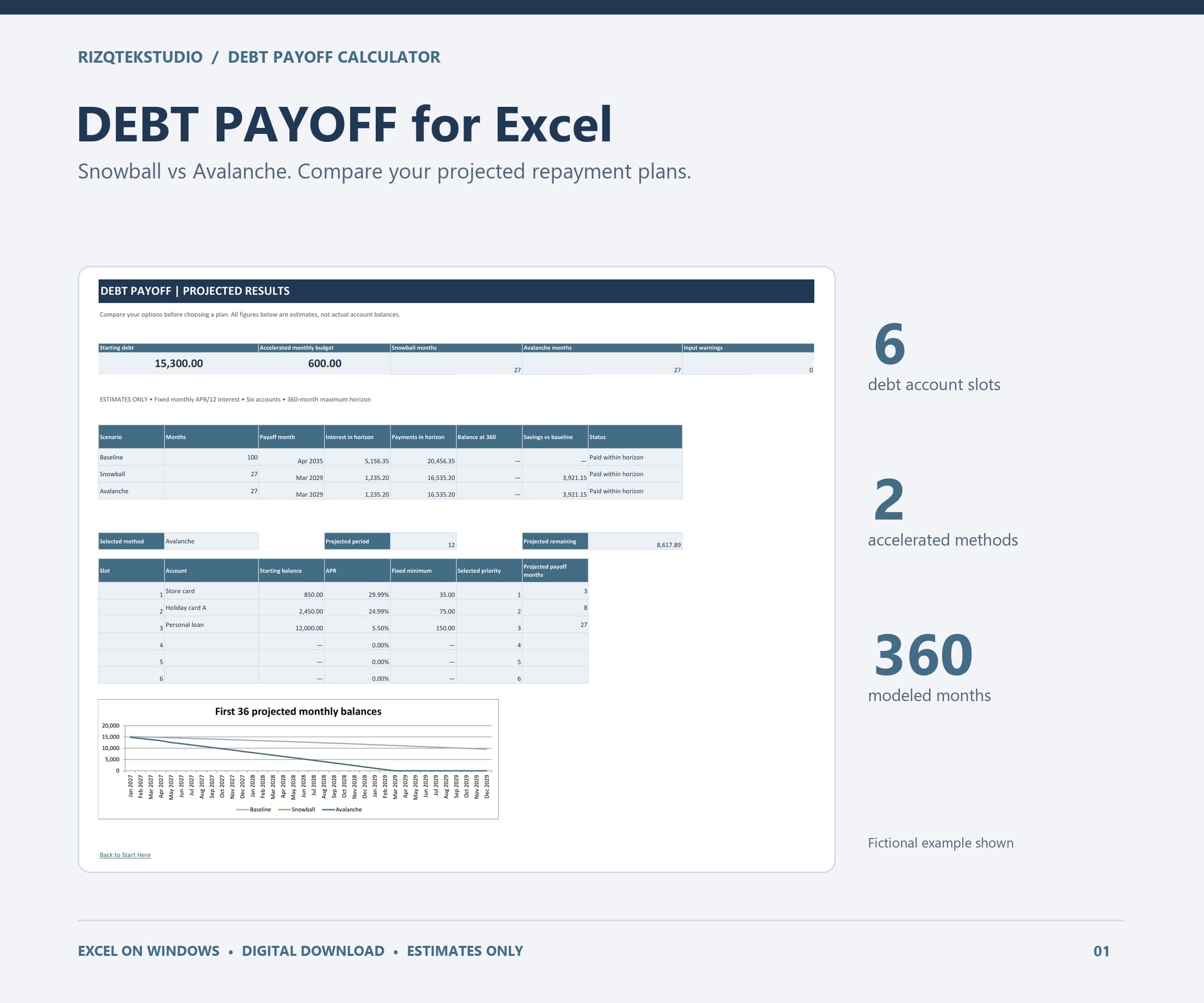
Read snowball and avalanche spreadsheet projections carefully
Understand the inputs, assumptions and limits behind a debt comparison workbook before interpreting projected balances or dates.
Begin with a consistent set of inputs
Gather balances, annual percentage rates and minimum payment amounts from the records you want to model. Record the date of those figures in your own notes. The Debt Payoff Planner accepts up to six accounts and models fixed rates and fixed minimum amounts.
A changed rate, a new purchase, a fee or a different minimum payment can change real outcomes. Update the inputs when your circumstances change and keep an earlier copy if you want to compare scenarios. The workbook is a projection tool, not an actual payment log.
Change one assumption at a time
Start with the baseline scenario, then compare the snowball and avalanche scenarios using the same balances and recurring payment assumptions. Snowball prioritises smaller balances; avalanche prioritises higher interest rates. The comparison illustrates the model's results under its assumptions rather than choosing a method for you.
If you want to explore an extra payment, change the recurring extra amount while keeping the other inputs the same. The planner also supports first-year one-off extras. Keep a note of what changed so that you can explain why two saved scenarios differ.
Read the time horizon correctly
The workbook projects up to 360 monthly periods. A remaining balance at the end of that horizon is not a projected payoff beyond it. The chart shows the first 36 projected monthly balances, so use the rest of the workbook to examine a longer scenario.
Do not confuse the chart's visible time window with the full model. Check the baseline and comparison figures together, and look for inputs that have been left blank or entered in the wrong units before drawing conclusions.
Keep statements and projections separate
Interest is approximated monthly using APR divided by 12 and rounded to cents. Actual lenders may calculate interest differently, and the model does not include new borrowing or fees. A projected balance or payoff date is therefore not guaranteed to match a lender statement.
Use lender records for actual amounts due and payment instructions. This guide explains how to read the spreadsheet; it does not assess an individual's debts or recommend a repayment decision.
Educational workbook guidance. Figures in examples are fictional; verify your own records.