How Landlords & Airbnb Hosts Track Rental Property Profits & Expenses
Master rental property accounting, tenant rent rolls, short-term rental platform fees, and tax deductible expenses in an automated spreadsheet.
The anatomy of rental cash flow: gross income vs NOI
Successful real estate investors manage their portfolios by tracking Net Operating Income (NOI) rather than just gross rent received. Gross rental income is only the starting number: vacancies, management fees, property taxes, insurance, and routine repairs immediately reduce your actual yield.
An effective rental property spreadsheet separates operating expenses from mortgage principal payments and capital reserves. This clarity ensures you know the true cash-on-cash return of every unit in your portfolio.
Short-term rental accounting: navigating platform fees and cleaning costs
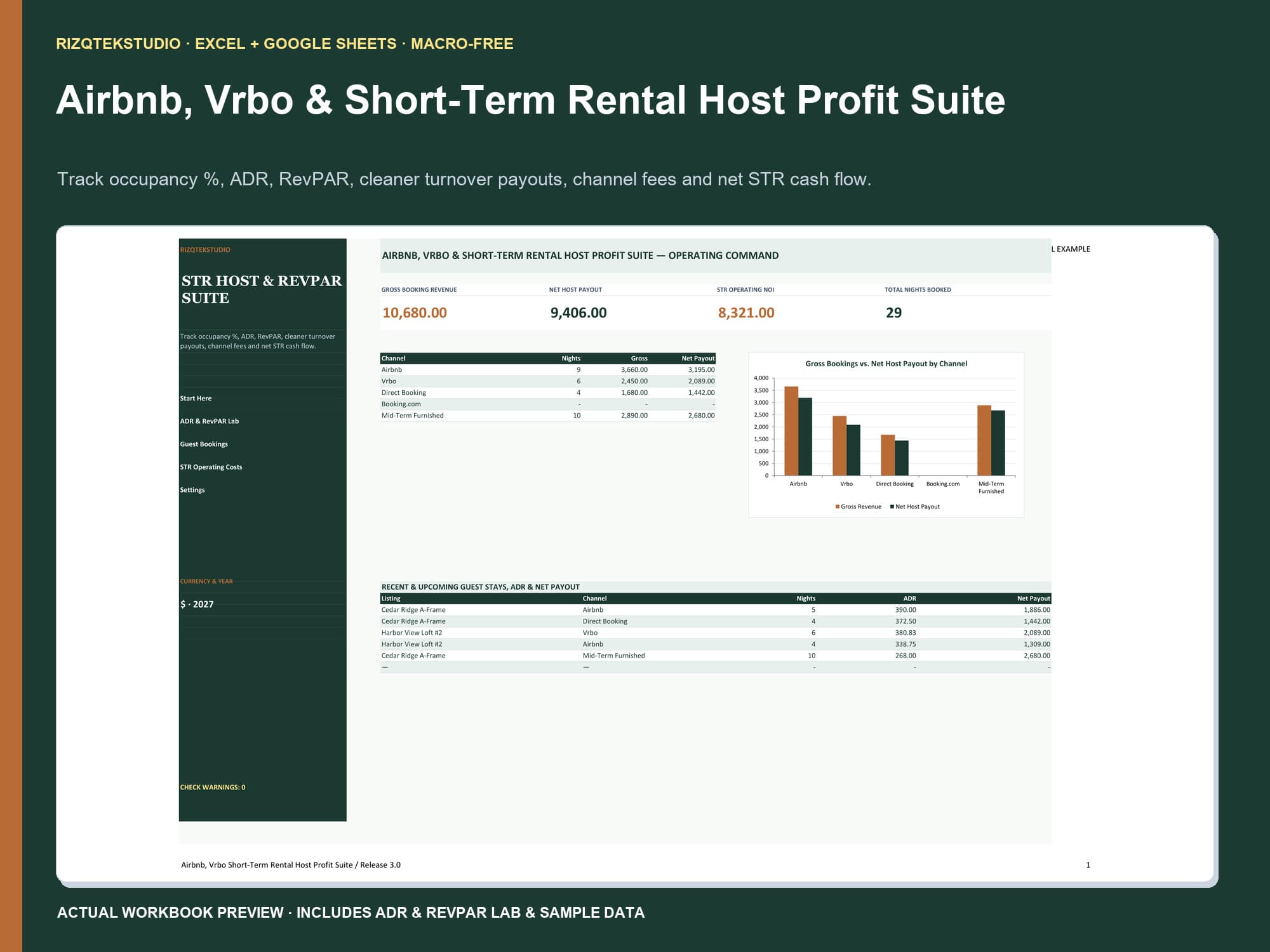
Hosting on Airbnb, VRBO, or direct booking sites introduces complexity that standard long-term leases do not have. Hosts must account for host service fee deductions (typically 3% on Airbnb), guest-paid cleaning fees, local occupancy taxes, and restocking expenses for guest amenities.
Recording your gross payout versus net bank deposit prevents surprise discrepancies at the end of the year. When platforms issue Form 1099-K, the reported amount reflects gross transactions, meaning all platform commissions and refunds must be properly logged as deductible business expenses.
Operating expenses versus capital expenditures (CapEx)
For tax reporting, distinguishing between routine repairs and capital improvements is critical. Fixing a leaking faucet or repainting a damaged wall is an immediate repair expense. In contrast, replacing an entire roof, installing new HVAC, or remodeling a kitchen is a capital improvement that typically must be depreciated over multiple years.
Keep dedicated line items for recurring maintenance versus long-term sinking funds. Having a visible CapEx reserve within your rental spreadsheet keeps you prepared for major mechanical failures without hurting personal cash flow.
Automating rent rolls and tenant management
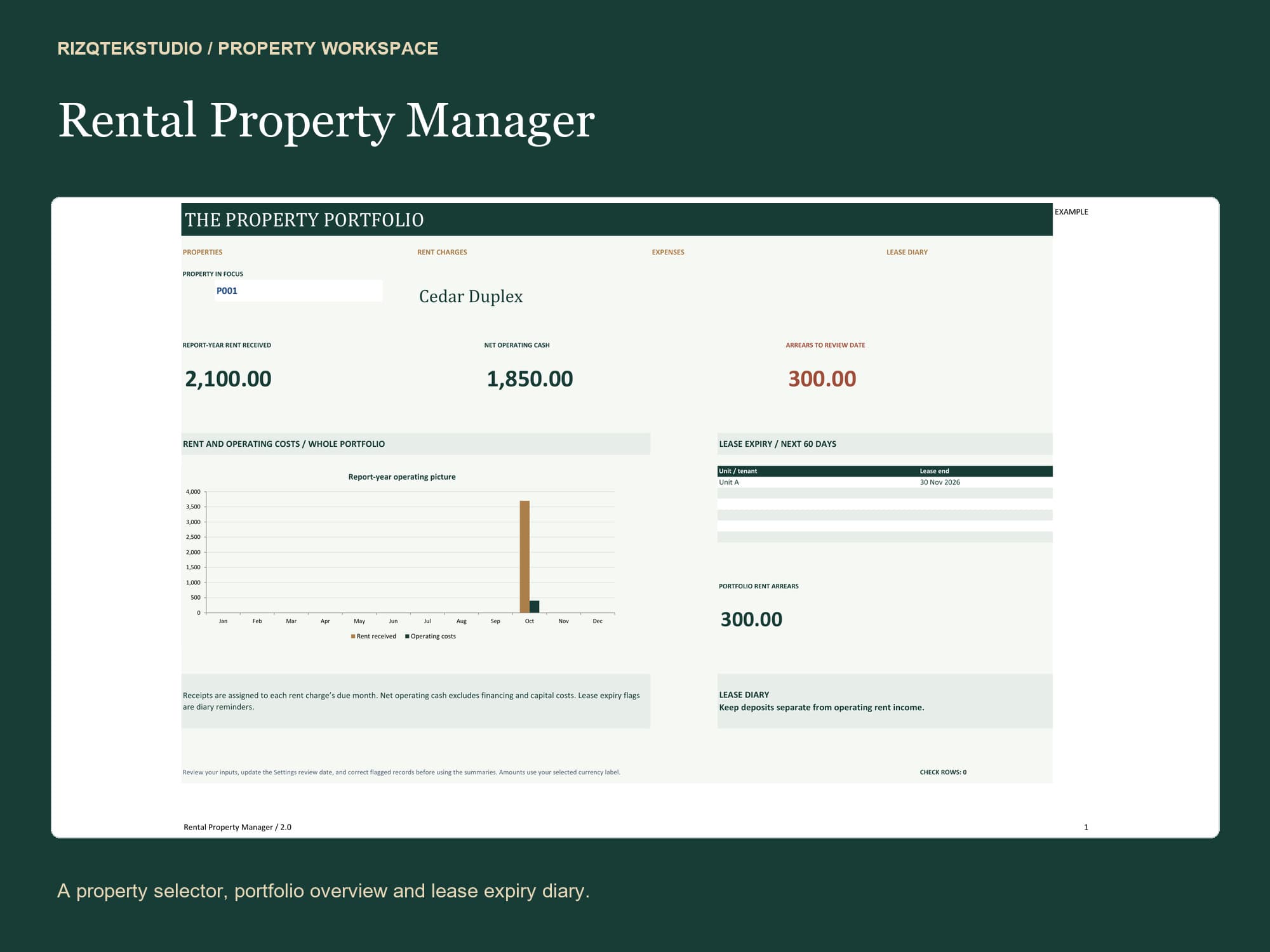
A solid rent roll workbook tracks tenant names, lease start and end dates, security deposit escrow amounts, and monthly payment status. Conditional formatting should instantly highlight upcoming lease renewals 60 days in advance so you can avoid costly vacancy gaps.
Consistently record late fees, utility chargebacks, and partial payments in the month they occur. Maintaining a digital log simplifies dispute resolution and provides clean records if legal or eviction notices are ever required.
Audit-proof mileage and travel deduction records
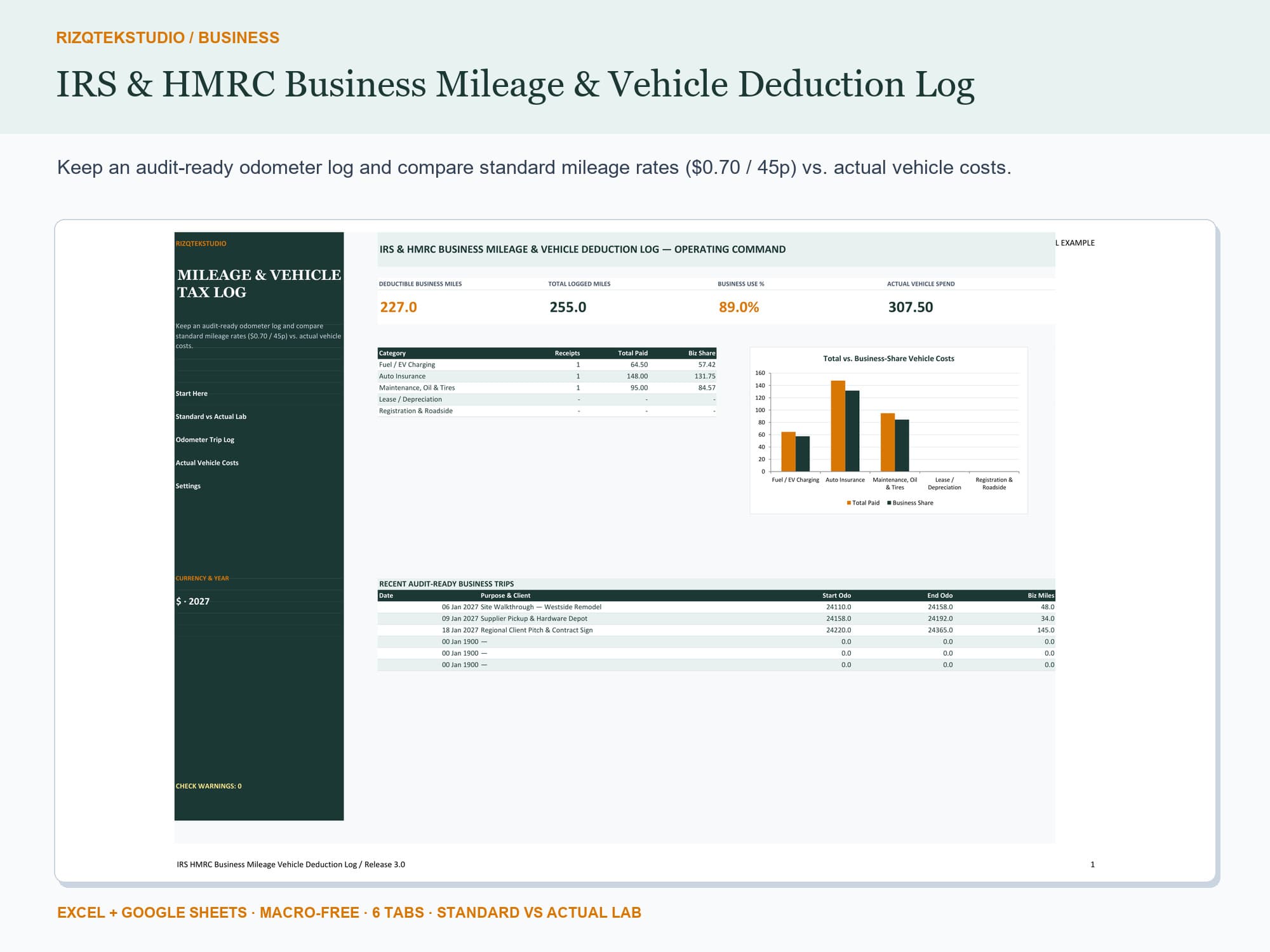
Every trip to inspect a rental property, meet a contractor, purchase supplies at the hardware store, or clean between short-term guests represents a legitimate tax deduction. In 2026 and 2027, the standard IRS business mileage rate allows investors to deduct significant vehicle expenses.
To satisfy tax requirements, your travel log must record the date, destination address, specific business purpose, and starting/ending odometer readings. A digital mileage spreadsheet updated after each trip ensures you capture every dollar of deductions without frantic end-of-year receipt digging.
Educational workbook guidance. Figures in examples are fictional; verify your own records.