Track sinking funds without counting the same money twice
Organise predictable future costs, record deposits and withdrawals, and keep a clear distinction between moving money and recording spending.
Give each fund a specific purpose
A sinking fund is a label for money you set aside for an expected future cost. Examples might include an annual subscription, a planned household replacement or seasonal gifts. The spreadsheet records the figures you enter; it does not create a bank account or transfer money.
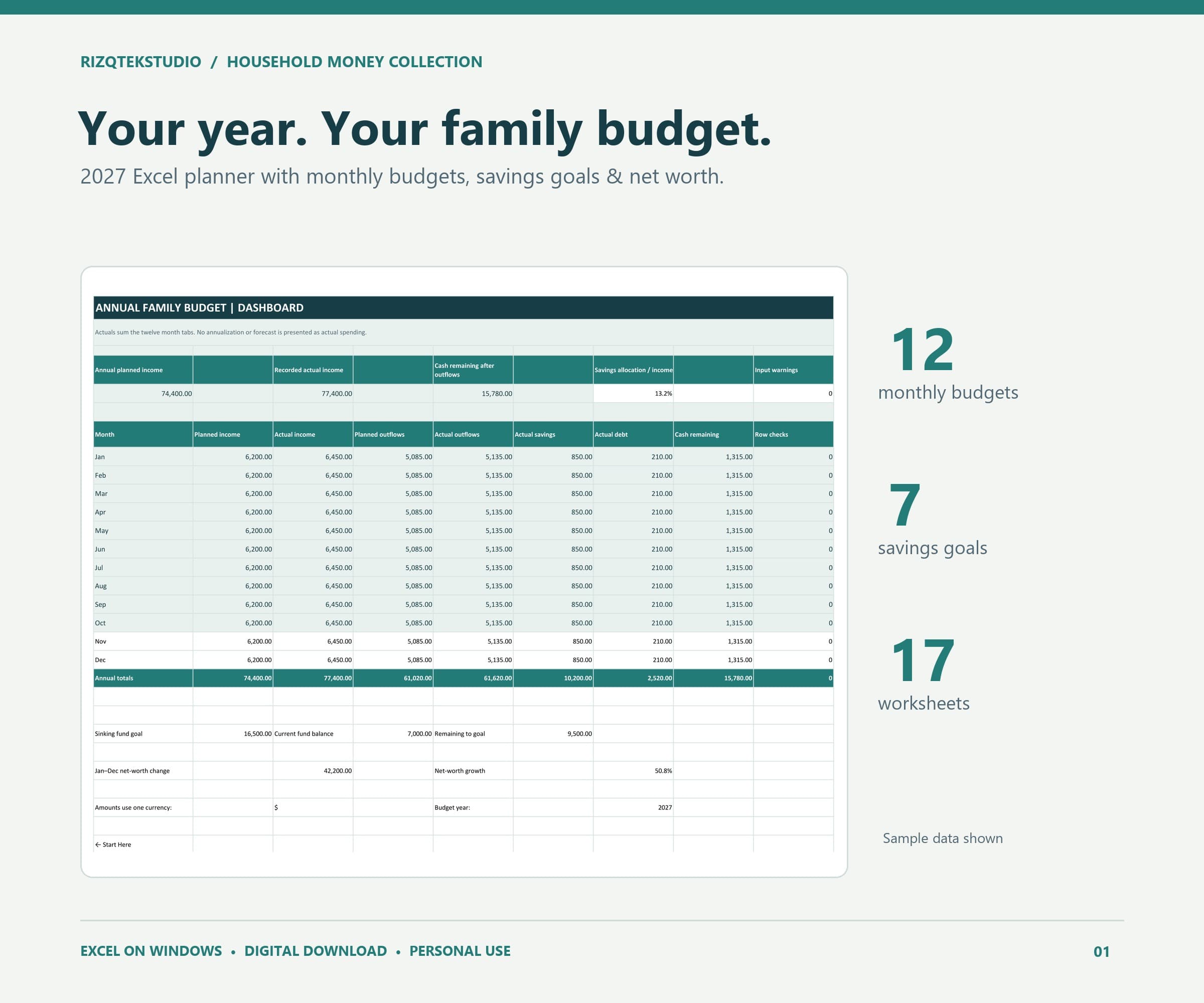
The Annual Family Budget includes seven sinking funds with deposits and withdrawals. Choose the purposes that matter to your household and keep related notes with your own records. Its input ranges are fixed, so do not rely on adding extra fund rows.
Keep the arithmetic visible
The basic reconciliation is opening balance plus deposits minus withdrawals equals the remaining balance. In a fictional example, a fund starting at 100 with a deposit of 25 and a withdrawal of 40 has 85 remaining. Compare that record with the money actually available in the account or envelope you use.
A target amount and a target date can help you work out a planning estimate outside the workbook: divide the amount still needed by the number of contributions remaining. This is arithmetic for organising a plan, not a guarantee that the amount is affordable or a promise that future costs will stay the same.
Separate transfers from purchases
Moving 25 from a current account to a savings account does not, by itself, mean you bought something. When the eventual purchase happens, use a consistent method for representing the expense in your monthly records and the withdrawal in the fund record.
Write down your convention so that another household member can follow it. Review the underlying transactions when totals seem unexpectedly high; treating both the transfer and the later purchase as separate spending can overstate the same cost.
Reconcile before you reuse the balance
Update the record after each deposit or withdrawal, then periodically compare it with your source records. Check whether a refunded purchase should also restore part of the fund balance. All entries are manual and there is no bank sync.
Keep different currencies separate in your source records. The workbook uses one currency label and does not calculate exchange rates. Save a backup before making large corrections to earlier entries.
Educational workbook guidance. Figures in examples are fictional; verify your own records.