Small Business Year-End Bookkeeping & 1099 Contractor Checklist
How small business owners and freelancers organize vendor payments, meet the $600 1099-NEC threshold, and close their annual books stress-free.
The 1099-NEC threshold: knowing who gets filed
In the United States, businesses are required to file Form 1099-NEC for every non-corporate contractor, freelancer, or service vendor paid $600 or more during the calendar year. This includes graphic designers, copywriters, virtual assistants, web developers, and independent tradespeople.
Payments made via credit card, PayPal, or third-party payment processors are generally reported by the processor on Form 1099-K rather than by your business on 1099-NEC. However, payments made via direct bank transfer (ACH), check, cash, or debit card must be tracked by your business and reported on 1099-NEC by the January 31 deadline.
Collect W-9 forms before issuing payment
The single biggest cause of year-end bookkeeping stress is chasing missing contractor tax details in January. Implement a strict internal policy: never issue payment to an independent contractor until you have received their signed Form W-9 containing their full legal name, business entity classification, and Taxpayer Identification Number (TIN/EIN/SSN).
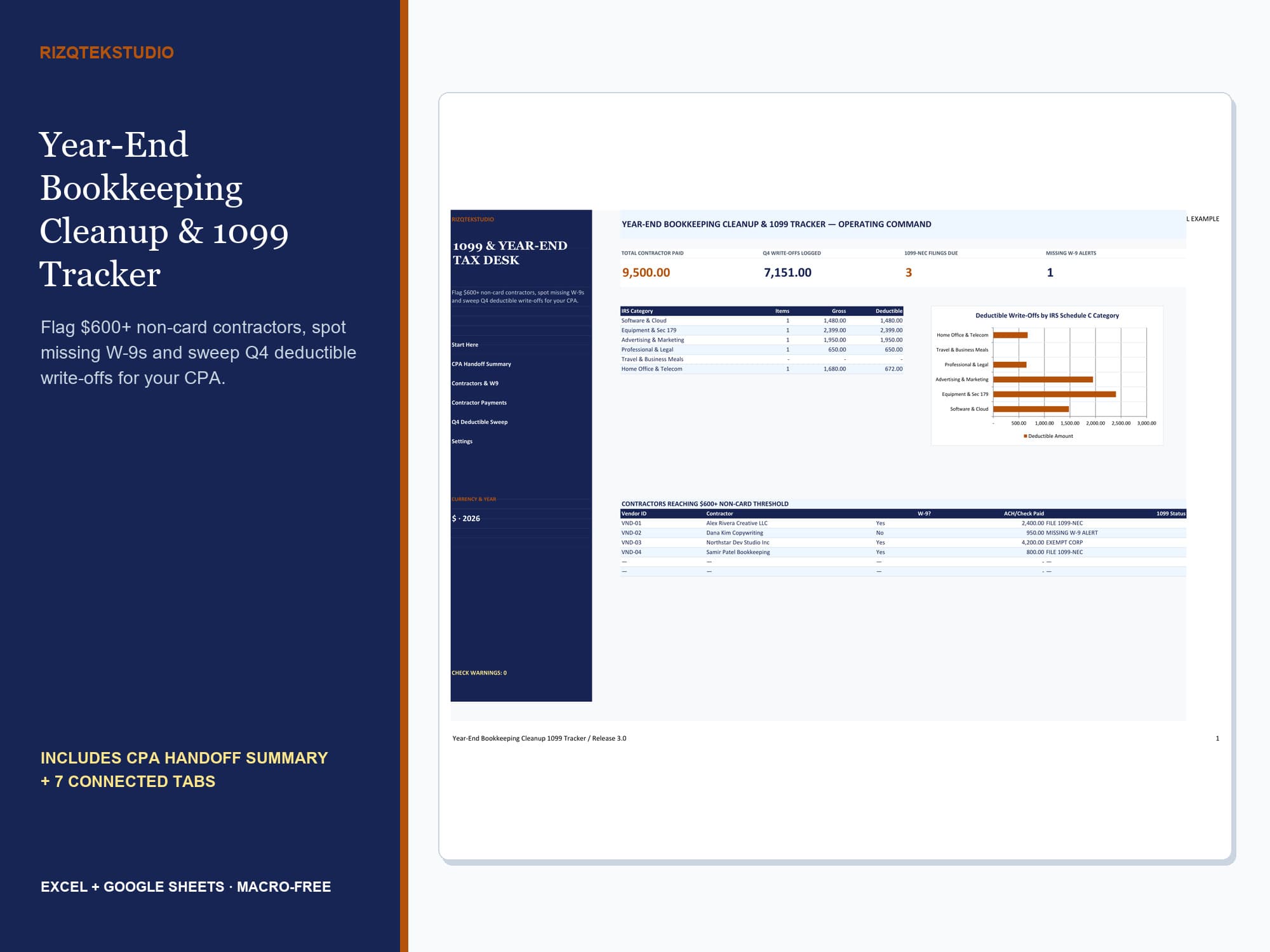
Log these vendor details directly into your year-end tax prep spreadsheet alongside their running payment totals so you can immediately see when a contractor approaches the $600 threshold.
Reconcile business bank and credit card accounts
A spreadsheet is only as accurate as the transactions supporting it. Before closing your annual books, reconcile every month of business bank and credit card statements. Look for duplicate subscription charges, uncashed vendor checks, and missed customer merchant payouts.
Identify and remove any incidental personal expenses that were accidentally charged to the business account, categorizing them as an Owner's Draw rather than a deductible business expense. Clean books protect your corporate veil and prevent audit complications.
Review accounts receivable and write off uncollectible debt
Year-end is the time to audit your sales pipeline and outstanding client invoices. Send polite payment reminders for invoices aged past 30 or 60 days. For invoices that are definitively uncollectible from defunct clients, consult with your CPA regarding recording them as bad debt write-offs.
Review customer retainer balances and prepayments to ensure revenue is recognized in the proper tax period according to your accounting method (cash versus accrual).
Prepare a clean package for your CPA or tax accountant
Tax preparers do not want a shoebox of crumpled receipts; they want an organized annual summary table showing total income, categorized expenses, contractor payouts, and capital asset purchases. Handing your accountant a well-structured Excel workbook reduces billable preparation hours and allows them to focus on maximizing your tax deductions.
Save an archived, read-only PDF and Excel copy of your finalized year-end figures and store all receipt backups securely for at least seven years in accordance with standard statutory record retention guidelines.
Educational workbook guidance. Figures in examples are fictional; verify your own records.